

How are my 11-month-old baby's senses developing, and what can I do to support their sensory development?
Quick Answer

At 11 months, your baby's senses are becoming more refined.
Their vision is sharper, they're recognizing familiar words, developing taste preferences, and actively exploring textures.
Encourage this development by providing a stimulating environment with varied sights, sounds, tastes, and safe-to-touch objects, and always shower them with affection!
Recommended Practices

Engage with Visual Stimulation
Show your baby colorful picture books, point out objects in the environment, and take them on walks to see new sights.
Narrate what you see to help them associate words with images.
Remember to keep the books age appropriate.
Encourage Auditory Development
Talk to your baby frequently, sing songs, and read aloud.
Play different types of music and introduce them to various sounds, like those of animals or household objects.
Repeat simple words and phrases often.
Introduce New Tastes and Smells
Offer a variety of healthy foods with different flavors and textures.
Don't be discouraged if they reject a new food at first; it can take multiple tries for a baby to accept it.
Let them smell different spices (safely) and flowers.
Provide Tactile Experiences
Let your baby explore different textures like soft blankets, smooth toys, and slightly rough fabrics.
Supervise them closely to ensure they don't put anything unsafe in their mouth.
A sensory bin with safe, textured objects can be great.
Play Interactive Games
Play peek-a-boo to enhance object permanence and visual tracking. Engage in simple games like 'pat-a-cake' to combine touch and sound. These games help develop coordination and sensory integration.
Offer Plenty of Affection
Cuddle, hug, and kiss your baby often.
Physical touch is crucial for their emotional and sensory development.
Baby massage can also be a wonderful way to bond and stimulate their sense of touch.
Use gentle strokes and baby-safe oils.
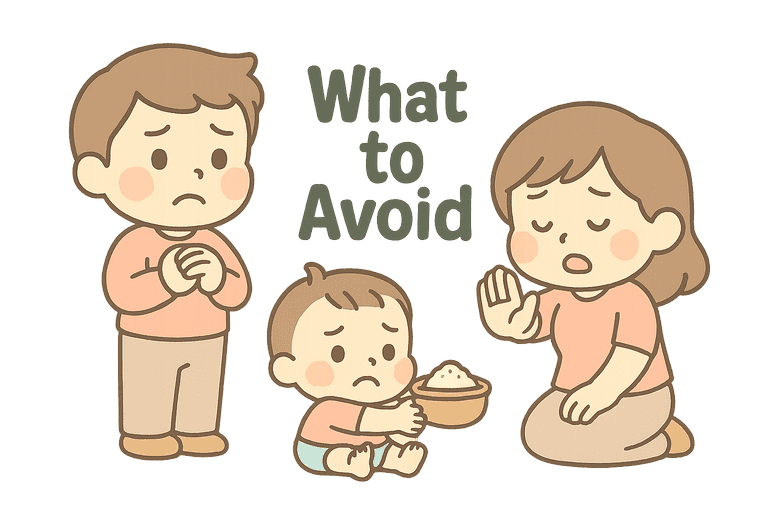
What to Avoid
Overstimulation
Avoid overwhelming your baby with too much sensory input at once. Watch for signs of overstimulation, such as fussiness, turning away, or closing their eyes. Provide quiet time when needed.
Unsafe Objects
Keep small objects, sharp items, and anything that could be a choking hazard out of your baby's reach. Always supervise them closely during sensory exploration.
Forcing Food
Never force your baby to eat a food they don't like. This can create negative associations with food and lead to picky eating habits later on. Offer variety and let them explore at their own pace.
Excessive Screen Time
Limit screen time as it can hinder sensory and motor development. Focus on real-world interactions and experiences. The Indian Academy of Pediatrics recommends minimal screen time for babies.
Ignoring Sensory Sensitivities
Pay attention to your baby's reactions to different stimuli.
If they seem particularly sensitive to certain sounds, textures, or smells, try to minimize their exposure to those triggers.
Some babies are just more sensitive then others.
Neglecting Regular Check-ups
Ensure your baby has regular check-ups with their pediatrician to monitor their sensory development and address any concerns promptly. Early intervention is key for addressing any potential issues.
Common Scenarios and Solutions


Your baby refuses a new food.
Don't force it. Try again another day. Mix a small amount of the new food with a food they already enjoy. Offer it alongside familiar favorites.
Your baby seems overwhelmed by a noisy environment.
Remove them from the noisy environment and take them to a quiet place. Offer comfort and reassurance. Avoid exposing them to loud noises for extended periods.
Your baby is constantly putting objects in their mouth.
Ensure the objects are safe and clean. Provide a variety of safe teething toys. Supervise them closely to prevent choking.
Your baby doesn't respond to their name.
Make sure they can hear you clearly. Repeat their name frequently in a loving tone. If you're still concerned, consult with your pediatrician to rule out any hearing issues.
Similar Questions Parents Ask


When should I be concerned about my baby's vision?
Consult your doctor if your baby's eyes don't move together, or if they have trouble focusing on objects.
How can I tell if my baby has a hearing problem?
If your baby doesn't respond to loud noises or isn't babbling by 12 months, consult your pediatrician.
Is it normal for my baby to be a picky eater?
Yes, it's common for babies to be picky eaters. Keep offering a variety of healthy foods and don't force them to eat.
How much screen time is too much for my baby?
The Indian Academy of Pediatrics recommends minimal to no screen time for babies under 18 months, focusing instead on real-world interactions.
Signs to Consult Immediately


Eyes that consistently turn inward or outward.
Inability to see or recognize objects at a distance.
Frequent eye rubbing or sensitivity to light.
Lack of response to loud noises.
Failure to babble or imitate sounds by 12 months.
Seizures or abnormal movements.
Sudden changes in behavior or responsiveness.
Detailed Explanation


At 11 months, your baby's brain is rapidly developing, and their senses are playing a crucial role in this process.
Vision is becoming sharper, allowing them to see objects both near and far.
They're also developing hand-eye coordination, enabling them to reach for and manipulate objects with greater precision.
Hearing is also becoming more refined.
Your baby is likely recognizing familiar words and responding to their name.
They may even be starting to imitate sounds and babble in a way that sounds like they're having a conversation.
Encourage this by talking to them frequently and responding to their vocalizations.
Taste preferences are also developing at this age.
Your baby may start to show a preference for certain foods and reject others.
Continue to offer a variety of healthy options and don't be discouraged if they don't like something at first.
It can take multiple tries for a baby to accept a new food.
Touch is another important sense that is developing at this age.
Your baby is learning about the world through touch, exploring different textures and surfaces.
Provide them with opportunities to explore safe objects with different textures, such as soft blankets, smooth toys, and slightly rough fabrics.
Between 6-12 months, babies often start to understand object permanence, the idea that things still exist even when they can't see them.
Games like peek-a-boo are great for reinforcing this concept.
Also, be mindful of seasonal changes.
In summer, ensure they aren't overexposed to the sun, and in winter, protect their skin from dryness.
For premature babies, sensory development may be slightly delayed.
It's important to consult with your pediatrician to ensure they are meeting their developmental milestones.
Premature babies may also be more sensitive to certain stimuli, so it's important to be mindful of their individual needs.
If you notice any signs of sensory impairment, such as eyes that don't move together, difficulty hearing, or a lack of response to stimuli, consult with your pediatrician immediately.
Early intervention can make a big difference in addressing any potential issues.
Sources
Indian Sources
Provides recommendations on appropriate feeding practices for infants and young children in the Indian context.
A peer-reviewed journal featuring research articles on various aspects of child health in India.
International Sources
WHO resources on child development, including milestones and recommendations for supporting healthy development. "Early childhood development is crucial for lifelong health and well-being."
AAP's website for parents, offering information on child health and development. "Sensory development is a key part of a child's overall development."
Recommended Reading for Parents
A comprehensive guide covering all aspects of infant care and development, available in many libraries and bookstores in India.
A popular book offering month-by-month guidance on baby care and development, widely available in India.