
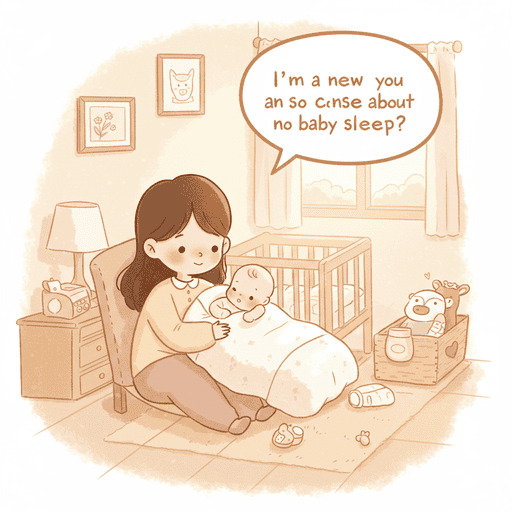
I'm a new mother and I'm so confused about my baby's sleep. How much should my newborn sleep, and what can I do to help them sleep better?
Quick Answer

It's completely normal to feel overwhelmed by your newborn's sleep!
Newborns sleep in short bursts, roughly 16-17 hours a day, but not in long stretches.
Focus on creating a calm environment, responding to their cues, and ensuring safe sleep practices like placing them on their back.
Remember, every baby is different, and it will get easier as you both adjust.
Recommended Practices

Create a Calm Sleep Environment
Dim the lights, reduce noise, and maintain a comfortable room temperature (around 24-27°C).
Swaddling can help newborns feel secure, but ensure it's not too tight and allows for hip movement.
A white noise machine or gentle lullaby can also be soothing.
In India, consider using mosquito nets for added protection, especially during monsoon season.
Establish a Bedtime Routine
Even a simple routine can signal to your baby that it's time to sleep.
This could include a warm bath, a gentle massage with coconut oil (a common practice in India), reading a short story, or singing a lullaby.
Consistency is key, so try to follow the same routine each night.
Respond to Baby's Sleep Cues
Watch for signs of tiredness, such as yawning, rubbing eyes, or fussiness.
Put your baby down to sleep when they're drowsy but not yet overtired.
This helps them learn to fall asleep independently.
Remember that crying is often a late sign of tiredness.
Practice Safe Sleep
Always place your baby on their back to sleep on a firm, flat surface, such as a crib mattress.
Avoid using pillows, blankets, or soft toys in the crib, as these can increase the risk of suffocation.
Sharing a room with your baby is recommended, but not sharing a bed.
In India, ensure the crib meets safety standards and is free from sharp edges or loose parts.
Daytime vs. Nighttime Sleep
Expose your baby to natural light during the day to help regulate their circadian rhythm.
Keep daytime naps shorter (1-2 hours) and more spaced out.
At night, keep the room dark and quiet.
If you need to feed or change your baby, use a dim light and avoid talking or playing with them.
Adjust as Baby Grows
As your baby gets older (around 4-6 months), their sleep patterns will change.
They may start sleeping for longer stretches at night and taking fewer naps during the day.
You can gradually introduce more structured sleep schedules, but always be flexible and responsive to your baby's needs.
Teething, milestones, and illnesses can all disrupt sleep, so be prepared to adjust your routine as needed.
What to Avoid
Sleeping on Stomach or Side
Placing your baby on their stomach or side to sleep significantly increases the risk of Sudden Infant Death Syndrome (SIDS).
Always place your baby on their back, even if they seem more comfortable in other positions.
This is the safest sleep position for infants.
Overdressing Baby
Overheating can also increase the risk of SIDS.
Dress your baby in light, breathable clothing and avoid using too many blankets.
A good rule of thumb is to dress your baby in one more layer than you would wear.
In hot Indian summers, opt for cotton clothing and ensure good ventilation.
Using Sleep Positioners or Wedges
Sleep positioners and wedges are marketed to prevent babies from rolling over, but they are not safe and can actually increase the risk of suffocation. Avoid using these products.
Ignoring Baby's Cries
While it's important to encourage independent sleep, ignoring your baby's cries can be harmful.
Respond to their needs promptly, especially in the early months.
Crying can indicate hunger, discomfort, or a need for comfort.
However, avoid picking up your baby every time they make a sound; sometimes, they may just need a moment to settle themselves.
Propping Up Bottles
Propping up bottles can lead to choking and ear infections. Always hold your baby during feeding and ensure they are in an upright position. This also allows for bonding and interaction.
Relying on Unsafe Traditional Practices
Some traditional practices, such as using mustard pillows or applying kajal around the eyes, may be harmful.
Mustard pillows can pose a suffocation risk, and kajal can contain lead and other harmful substances.
Consult with your doctor before using any traditional remedies.
Common Scenarios and Solutions


Baby is crying inconsolably at night.
First, check if your baby is hungry, needs a diaper change, or is too hot or cold.
Try swaddling, rocking, or singing to soothe them.
If they continue to cry, consider offering a pacifier or taking them for a walk.
If the crying persists and you're concerned, consult with your doctor.
Baby is waking up frequently during the night.
Frequent awakenings are normal in newborns.
Ensure your baby is comfortable and fed.
Try to avoid stimulating them too much during nighttime feedings and diaper changes.
Gradually, they will start sleeping for longer stretches.
Baby is only napping for short periods during the day.
Short naps are also common in newborns.
Try to create a calm and quiet environment for naps.
Swaddling or white noise can help.
Don't worry too much about the length of naps; focus on ensuring your baby is getting enough overall sleep.
Baby is resisting bedtime.
Establish a consistent bedtime routine to signal to your baby that it's time to sleep.
Ensure they are not overtired before putting them down.
Try a warm bath, a gentle massage, or reading a story to help them relax.
Similar Questions Parents Ask


Is it okay to let my baby cry it out?
While some parents choose to use the 'cry it out' method, it's generally not recommended for newborns. Responding to your baby's needs is crucial in the early months.
When will my baby start sleeping through the night?
Most babies start sleeping through the night (6-8 hours) around 6 months of age, but every baby is different.
Is it safe to use a baby swing or rocker for sleep?
While swings and rockers can be soothing, they are not recommended for prolonged sleep. Always place your baby on a firm, flat surface for sleep.
How can I tell if my baby is getting enough sleep?
Signs of adequate sleep include being alert and playful during wakeful periods, feeding well, and having regular bowel movements. Consult with your doctor if you have concerns.
Signs to Consult Immediately


Difficulty breathing or pauses in breathing during sleep
Blue or pale skin
High fever
Lethargy or unresponsiveness
Poor feeding
Excessive vomiting or diarrhea
Seizures
Detailed Explanation


Newborn sleep is vastly different from adult sleep.
Their sleep cycles are much shorter, lasting only about 45-60 minutes, and they spend more time in active (REM) sleep.
This is why they wake up frequently, even at night.
Their brains are still developing, and frequent awakenings are normal and necessary for brain growth and development.
In the first few months, your baby's sleep will be erratic and unpredictable.
They may sleep for 16-17 hours a day, but this will be spread out in short bursts throughout the day and night.
Don't expect them to sleep through the night yet; that usually happens later, around 6 months or older.
Focus on establishing healthy sleep habits and responding to their needs.
It's important to differentiate between normal newborn sleep patterns and potential problems.
While frequent awakenings are normal, excessive crying, difficulty breathing, or signs of illness should be addressed by a doctor.
Also, be aware of signs of sleep apnea, such as pauses in breathing or gasping for air during sleep.
As your baby grows, their sleep patterns will gradually mature.
Around 3-6 months, they may start sleeping for longer stretches at night, and their daytime naps may become more predictable.
By 6-12 months, many babies are sleeping through the night and taking 2-3 naps a day.
However, every baby is different, and some may take longer to establish consistent sleep patterns.
Premature babies may have different sleep patterns than full-term babies.
They may sleep more overall but have more fragmented sleep.
They may also be more sensitive to light and noise.
Work closely with your pediatrician to develop a sleep plan that meets your premature baby's unique needs.
If your baby has any health conditions, such as colic or reflux, these can also affect their sleep.
Consult with your doctor for guidance on managing these conditions and promoting better sleep.
Seasonal changes in India can also affect your baby's sleep.
In the summer, ensure the room is cool and well-ventilated.
Use light, breathable clothing and consider using a fan or air conditioner.
During the monsoon season, protect your baby from mosquitoes and ensure the room is dry and free from dampness.
In the winter, keep the room warm and cozy, but avoid overdressing your baby.
A warm bath before bedtime can also help them relax and sleep better.
Remember to adjust your baby's clothing and bedding according to the weather to ensure they are comfortable and safe.
Sources
Indian Sources
Refer to the IAP website for updated guidelines on infant sleep and safe sleep practices.
Search the Indian Pediatrics journal for research articles on infant sleep patterns in the Indian context.
International Sources
WHO provides global recommendations on infant health, including sleep.
AAP provides detailed guidelines on safe sleep practices for infants.
UNICEF promotes early childhood development, including healthy sleep habits.
Recommended Reading for Parents
A comprehensive guide to infant and child care, available in many bookstores in India.
A popular book covering various aspects of infant development and care, widely available in India.