
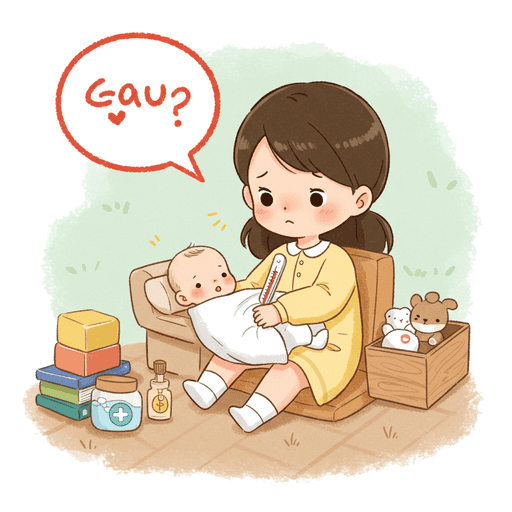
What should I do if my child has a fever?
Quick Answer

If your child has a fever, keep them comfortable and hydrated.
You can give them paracetamol or ibuprofen as directed by your doctor, but never aspirin.
It's important to monitor their symptoms and seek medical attention if they seem very ill or if the fever persists for more than a few days.
Recommended Practices

Keep Your Child Hydrated
Offer plenty of fluids like water, clear soups, or diluted juice to prevent dehydration.
Small, frequent sips are often easier for a child with a fever to manage.
In summer, consider giving electrolyte solutions if your child is sweating a lot.
Administer Medication as Directed
Give paracetamol or ibuprofen according to your doctor's instructions for the correct dosage based on your child's weight.
Always use a measuring spoon or syringe to ensure accuracy.
Never give aspirin to children due to the risk of Reye's syndrome.
Dress Your Child Lightly
Overdressing can trap heat and make the fever worse.
Dress your child in light, breathable clothing like cotton.
A single light blanket is usually sufficient for comfort.
In winter, avoid overheating the room.
Ensure Adequate Rest
Encourage your child to rest and avoid strenuous activities.
Rest helps the body focus on fighting the infection.
Quiet activities like reading or watching a movie are good choices.
As they recover, gradually increase their activity level.
Monitor Your Child's Temperature
Check your child's temperature regularly, but don't become obsessive.
A temperature log can be helpful to track the fever's pattern.
Remember that temperature readings can vary depending on the method used (oral, rectal, armpit).
Sponge Bath (If Necessary)
If your child is very uncomfortable, a lukewarm sponge bath can help lower their temperature.
Use lukewarm water, not cold, and avoid chilling them.
Focus on areas like the forehead, armpits, and groin.
This is generally more helpful for older babies and toddlers.
What to Avoid
Avoid Aspirin
Never give aspirin to children or teenagers due to the risk of Reye's syndrome, a rare but serious condition that can cause liver and brain damage.
Don't Use Alcohol Rubs
Applying alcohol to the skin to lower fever is dangerous. Alcohol can be absorbed through the skin and cause alcohol poisoning, especially in young children.
Avoid Overdressing
Wrapping a feverish child in too many layers can prevent their body from cooling down effectively, potentially raising their temperature further.
Don't Force-Feed
While it's important to keep your child hydrated, don't force them to eat if they don't have an appetite. Offer small, frequent meals of easily digestible foods. Focus on fluids first.
Avoid Cold Baths
Cold baths can cause shivering, which can actually raise the body's core temperature. Lukewarm water is best for sponge baths.
Don't Ignore Other Symptoms
Focusing solely on the fever can cause you to miss other important symptoms.
Watch for signs of dehydration, difficulty breathing, rash, or unusual behavior, and seek medical advice if you notice any of these.
Common Scenarios and Solutions


My child has a fever and is refusing to drink anything.
Offer small sips of fluids frequently, even if it's just a teaspoon at a time.
Try different types of fluids, such as water, diluted juice, or clear broth.
If your child continues to refuse fluids and shows signs of dehydration (dry mouth, decreased urination), seek medical attention.
My child's fever is coming down with medication, but it keeps spiking back up.
It's normal for a fever to fluctuate, even with medication.
Continue to administer medication as directed and monitor your child's symptoms.
If the fever persists for more than a few days or is accompanied by other concerning symptoms, consult your doctor.
My child has a fever and a rash.
A fever with a rash can be a sign of various infections, some of which can be serious.
It's important to seek medical attention to determine the cause of the rash and receive appropriate treatment.
Don't try to self-diagnose or treat the rash at home.
My child had a febrile seizure.
Febrile seizures can be scary, but they are usually harmless.
However, it's important to seek medical attention after a febrile seizure to rule out any underlying medical conditions.
Your doctor can provide guidance on how to manage future fevers and prevent further seizures.
Similar Questions Parents Ask


What's the best way to take my child's temperature?
The best method depends on your child's age. Rectal thermometers are most accurate for infants, while oral or temporal artery thermometers are suitable for older children.
How high is too high for a fever?
A fever above 104°F (40°C) is considered high and warrants medical attention, especially if accompanied by other concerning symptoms.
Can teething cause a fever?
Teething can cause a slight increase in temperature, but it usually doesn't cause a high fever. If your teething baby has a fever above 100.4°F (38°C), it's likely due to an infection.
When can my child go back to school or daycare after a fever?
Your child should stay home until they have been fever-free for at least 24 hours without the use of fever-reducing medication.
Signs to Consult Immediately


Fever in a baby under 3 months of age (100.4°F or 38°C or higher)
Difficulty breathing or rapid breathing
Stiff neck
Severe headache
Seizures
Lethargy or unresponsiveness
Rash, especially if it doesn't blanch when pressed
Signs of dehydration (dry mouth, decreased urination, no tears when crying)
Persistent vomiting or diarrhea
Fever lasting for more than 5 days
Detailed Explanation


Fever is a natural response to infection.
The body raises its temperature to create an environment that's less hospitable to viruses and bacteria.
While a fever can be alarming, it's usually not harmful unless it's very high (above 104°F or 40°C) or accompanied by other concerning symptoms.
Normal body temperature varies slightly from person to person and throughout the day.
It's typically around 98.6°F (37°C), but can range from 97°F (36.1°C) to 99°F (37.2°C).
A fever is generally defined as a temperature of 100.4°F (38°C) or higher when taken rectally, or 100°F (37.8°C) or higher when taken orally.
It's important to remember that the height of the fever doesn't always indicate the severity of the illness.
A child with a mild viral infection might have a high fever, while a child with a more serious bacterial infection might have a lower fever.
Pay more attention to how your child is behaving and whether they have other symptoms.
For babies under 3 months, any fever of 100.4°F (38°C) or higher requires immediate medical attention.
Their immune systems are still developing, and even a mild infection can quickly become serious.
Don't hesitate to call your doctor or go to the nearest hospital.
For older babies and children, the approach to managing fever depends on their overall condition.
If they are alert, playful, and eating and drinking, you can usually manage the fever at home with rest, fluids, and medication.
However, if they are lethargic, irritable, or have difficulty breathing, seek medical advice.
In the summer months, dehydration is a greater concern.
Ensure your child is drinking plenty of fluids to replace those lost through sweat.
In the winter, avoid overdressing your child, as this can trap heat and make the fever worse.
During monsoon season, be extra vigilant about hygiene to prevent infections that can cause fever.
Sources
Indian Sources
Refer to the IAP website for the latest guidelines on managing fever in children in the Indian context.
Search the Indian Pediatrics journal for research articles on fever and its management in Indian children.
International Sources
WHO provides global guidelines on managing fever in children, including recommendations on medication and home care.
AAP provides information for parents on understanding and managing fever in children.
UNICEF's website offers resources and information on child health and survival, including fever management.
Recommended Reading for Parents
A comprehensive guide covering various aspects of baby care, including managing common illnesses like fever. Check for availability in Indian bookstores or online retailers.
A widely respected resource on child health and development. Check for availability in Indian bookstores or online retailers.