
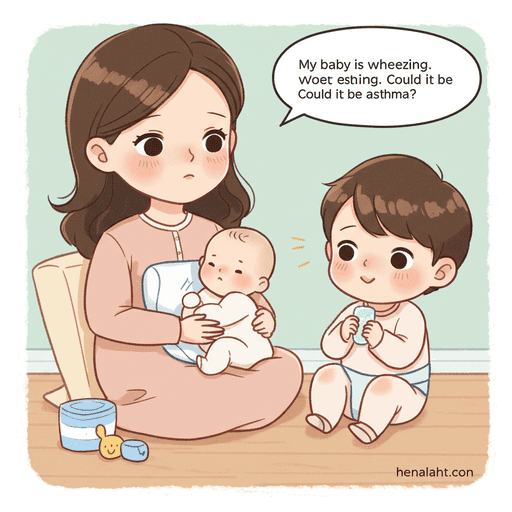
My baby is wheezing. Could it be asthma?
Quick Answer

Wheezing in babies is common, often due to viral infections like a cold.
It doesn't automatically mean your baby has asthma.
Since babies have small airways, they're more prone to wheezing when sick.
If the wheezing is frequent or accompanied by other breathing problems, it's best to consult your doctor for proper evaluation and management.
Recommended Practices

Monitor Breathing Patterns
Keep a close eye on your baby's breathing.
Note when the wheezing occurs (during the day, night, after feeding), how long it lasts, and any other symptoms like coughing or rapid breathing.
This information will be helpful for your doctor.
Keep Nasal Passages Clear
Use saline nasal drops to loosen mucus and gently suction with a bulb syringe, especially before feeding and sleeping.
This helps clear your baby's nasal passages, making breathing easier.
You can find saline drops at most pharmacies.
Ensure Proper Hydration
Offer frequent breastfeeds or formula to keep your baby well-hydrated.
Adequate hydration helps thin the mucus, making it easier to cough up or swallow.
If your baby is older than 6 months, you can also offer small sips of water.
Maintain a Smoke-Free Environment
Avoid exposing your baby to smoke, as it can irritate their airways and worsen wheezing.
This includes cigarette smoke, incense, and smoke from cooking fires.
Ask family members to smoke outside and away from your baby.
Elevate the Head of the Crib
Slightly elevate the head of your baby's crib or bassinet by placing a towel or small pillow *under* the mattress (never directly under the baby).
This can help with drainage and make breathing more comfortable.
A 30-degree angle is usually sufficient.
Consider a Humidifier
Use a cool-mist humidifier in your baby's room, especially during dry weather or if you're using air conditioning.
Humidified air can help soothe irritated airways and loosen congestion.
Be sure to clean the humidifier regularly to prevent mold growth.
What to Avoid
Avoid Over-the-Counter Cough Medicines
Do not give over-the-counter cough or cold medicines to babies under 2 years old.
These medications are not effective and can have harmful side effects.
Always consult your doctor before giving any medication to your baby.
Don't Use Vapor Rubs on Infants
Avoid applying vapor rubs (like Vicks VapoRub) directly to your baby's skin, especially on their chest or nose.
These products can be irritating and may worsen breathing problems in young infants.
There are baby-safe alternatives, but always check with your doctor first.
Avoid Exposure to Allergens
If you suspect your baby's wheezing is triggered by allergies, try to identify and avoid potential allergens like dust mites, pet dander, or pollen.
Regularly clean your home, wash bedding frequently, and consider using allergen-proof covers for mattresses and pillows.
Don't Delay Seeking Medical Advice
If your baby's wheezing is severe, persistent, or accompanied by other concerning symptoms (like difficulty breathing, blue lips, or fever), don't hesitate to seek medical attention.
Early diagnosis and treatment can prevent complications.
Avoid Self-Treating with Antibiotics
Wheezing is often caused by viral infections, which antibiotics cannot treat.
Unnecessary antibiotic use can lead to antibiotic resistance.
Only use antibiotics if prescribed by your doctor for a bacterial infection.
Don't Assume It's 'Just a Cold'
While many cases of wheezing are due to common colds, it's important to rule out other potential causes, especially if the wheezing is recurrent or severe.
Asthma, bronchiolitis, and other respiratory conditions can also cause wheezing in babies.
Common Scenarios and Solutions


Baby starts wheezing during a cold.
Keep nasal passages clear with saline drops and gentle suction.
Offer frequent feeds to prevent dehydration.
Use a cool-mist humidifier.
Monitor for signs of respiratory distress and consult your doctor if symptoms worsen.
Baby wheezes after being around pets.
Bathe the pet regularly and keep them out of the baby's room.
Wash bedding frequently.
Consider using an air purifier with a HEPA filter.
If symptoms persist, consult your doctor about allergy testing.
Baby has recurrent wheezing episodes.
Keep a diary of when the wheezing occurs, what seems to trigger it, and any other symptoms. Share this information with your doctor. They may recommend allergy testing or asthma medication.
Baby is having difficulty breathing during a wheezing episode.
Sit the baby upright or hold them in a comfortable position.
Loosen any tight clothing.
Call for emergency medical help immediately if the baby is struggling to breathe, has blue lips, or is unresponsive.
Similar Questions Parents Ask


What's the difference between wheezing and stridor?
Wheezing is a high-pitched whistling sound from the lower airways, while stridor is a harsh, crowing sound from the upper airways.
Can allergies cause wheezing in babies?
Yes, allergies to things like pollen, dust mites, or pet dander can trigger wheezing in some babies.
Is wheezing always a sign of asthma?
No, wheezing can be caused by various factors, including viral infections, allergies, and inhaled foreign objects.
When should I take my wheezing baby to the emergency room?
Seek immediate medical attention if your baby is having difficulty breathing, has blue lips, is unresponsive, or has a high fever.
Signs to Consult Immediately


Difficulty breathing (rapid breathing, nasal flaring, chest retractions)
Blue lips or skin (cyanosis)
High fever (over 100.4°F or 38°C in infants under 3 months)
Unresponsiveness or lethargy
Severe coughing or choking
Wheezing that doesn't improve with home treatment
Detailed Explanation


Wheezing is a high-pitched whistling sound that occurs when air flows through narrowed airways in the lungs.
In babies, the airways are naturally smaller and more easily blocked by mucus or inflammation.
This is why they are more prone to wheezing than older children or adults.
The most common cause of wheezing in babies is a viral respiratory infection, such as a cold or bronchiolitis.
These infections cause inflammation and mucus production in the airways, leading to narrowing and wheezing.
Other potential causes of wheezing include asthma, allergies, inhaled foreign objects, and certain congenital conditions.
It's important to differentiate between occasional wheezing due to a cold and recurrent wheezing that may indicate asthma.
Asthma is a chronic inflammatory condition that causes the airways to become hyperresponsive, meaning they narrow easily in response to triggers like allergens, irritants, or exercise.
While asthma can develop at any age, it's often diagnosed in early childhood.
Normal breathing rates for infants vary with age.
A newborn typically breathes 30-60 times per minute, while a 6-month-old breathes around 25-40 times per minute.
Watch for signs of respiratory distress, such as rapid breathing (tachypnea), nasal flaring, chest retractions (skin pulling in between the ribs), and grunting.
These signs indicate that your baby is working hard to breathe and needs immediate medical attention.
If your baby is wheezing, your doctor will perform a physical exam and ask about their medical history, including any family history of allergies or asthma.
They may also order tests, such as a chest X-ray or blood tests, to help determine the cause of the wheezing.
Treatment will depend on the underlying cause and may include bronchodilators (to open the airways), corticosteroids (to reduce inflammation), and supportive care (like oxygen therapy).
Premature babies are at higher risk for respiratory problems, including wheezing, due to their underdeveloped lungs.
They may require specialized care and monitoring in the neonatal intensive care unit (NICU).
Babies with underlying health conditions, such as congenital heart disease or cystic fibrosis, are also more likely to experience wheezing.
In India, seasonal changes can affect respiratory health.
During the winter months, cold and dry air can irritate the airways and worsen wheezing.
In the monsoon season, increased humidity and mold growth can trigger allergies and asthma.
During the summer, air pollution and dust can also contribute to respiratory problems.
It's important to take precautions to protect your baby from these environmental factors, such as using air purifiers, avoiding outdoor activities during peak pollution times, and keeping your home clean and well-ventilated.
Sources
Indian Sources
Refer to the latest IAP guidelines for updated recommendations on asthma diagnosis and treatment in children.
Search for articles on respiratory illnesses and asthma in Indian children for relevant research and clinical updates.
International Sources
WHO provides global information and recommendations on asthma management, including childhood asthma. "Asthma is a chronic disease characterized by recurrent attacks of breathlessness and wheezing."
UNICEF's website offers resources on child health, including information on respiratory illnesses.
Recommended Reading for Parents
A comprehensive guide to infant and child care, available in many Indian bookstores and online.