
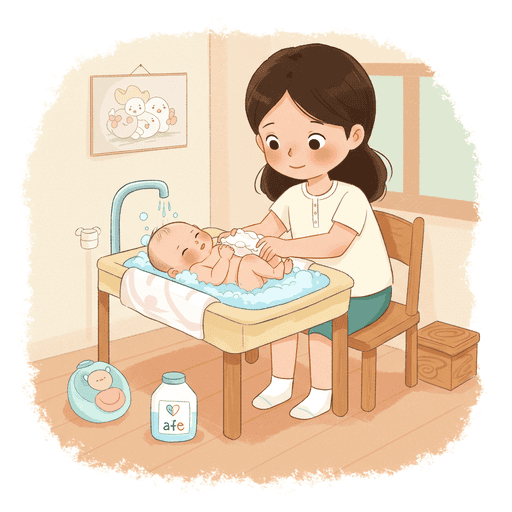
How should I bathe my newborn baby safely and effectively at home in India?
Quick Answer

Bathing your newborn is a gentle process.
Delay the first bath for at least 24 hours to maintain body temperature and encourage bonding.
Until the umbilical cord falls off, stick to sponge baths, and after that, you can transition to regular baths two or three times a week, always ensuring the water is warm and you're using gentle, fragrance-free products.
Recommended Practices

Delay the First Bath
Wait at least 24 hours after birth before giving your baby their first bath.
This helps stabilize their body temperature and blood sugar levels, and promotes bonding and breastfeeding.
If a full day isn't possible, wait at least 6 hours.
Sponge Baths Until the Cord Falls Off
Until the umbilical cord stump falls off (usually within 1-2 weeks), give your baby sponge baths.
Prepare a basin of warm water, a soft washcloth, and a towel.
Gently cleanse your baby, paying attention to creases under the arms, behind the ears, and in the diaper area.
Keep the baby warm by uncovering only the parts you are actively washing.
Frequency of Baths
Newborns don't need daily baths.
Two to three baths per week are usually sufficient during the first year.
More frequent bathing can dry out their delicate skin.
Adjust based on the weather; in hotter months, a quick daily rinse might be refreshing, but still avoid excessive soap use.
Water Temperature
Always check the water temperature with your wrist or elbow to ensure it's warm, not hot.
The AAP recommends that the hottest temperature at the faucet should be no more than 120 degrees Fahrenheit to help avoid burns.
Aim for around 37-38°C (98.6-100.4°F).
Consider using a thermometer for accuracy.
Safe Bathing Environment
Use a safe infant tub with a sloped, textured surface to prevent slipping.
Never leave your baby unattended, even for a moment.
Keep all supplies within reach.
If you need to leave, take the baby with you.
This is crucial to prevent accidents.
Gentle Cleansing
Use mild, fragrance-free, and hypoallergenic soaps or cleansers.
Avoid products with harsh chemicals or additives.
Gently pat your baby's skin dry after the bath and apply a fragrance-free, hypoallergenic moisturizer to prevent dryness.
Coconut oil, a staple in many Indian households, can also be used as a natural moisturizer.
What to Avoid
Bathing Too Soon After Birth
Avoid bathing your baby immediately after birth.
Early bathing can lead to hypothermia and hypoglycemia.
Delaying the first bath allows the vernix (the white, waxy substance on the baby's skin) to provide natural moisturizing and antibacterial benefits.
Leaving Baby Unattended
Never leave your baby alone in the bath, even for a second. Infant bath seats are not recommended as they can tip over. Always maintain touch supervision, keeping one hand on your baby at all times.
Using Hot Water
Avoid using hot water, as it can cause burns. Always check the water temperature before placing your baby in the bath. Install anti-scald devices on your taps if possible.
Harsh Soaps and Shampoos
Avoid using soaps and shampoos with harsh chemicals, fragrances, or dyes. These can irritate your baby's delicate skin. Opt for mild, hypoallergenic, and fragrance-free products.
Bathing Too Frequently
Avoid bathing your baby every day, as it can dry out their skin.
Over-bathing strips the skin of its natural oils, leading to dryness and irritation.
Adjust frequency based on your baby's needs and the weather.
Ignoring Umbilical Cord Care
Do not submerge the umbilical cord stump in water until it falls off.
Keep the area clean and dry to prevent infection.
If you notice any redness, swelling, or discharge, consult your doctor immediately.
Avoid applying oil or any other substance on the stump.
Common Scenarios and Solutions


Baby cries during bath time.
Check the water temperature to ensure it's comfortable.
Speak to your baby in a soothing voice and maintain eye contact.
If they continue to cry, end the bath and try again another day.
Sometimes, babies simply don't enjoy baths.
Umbilical cord area gets wet during a sponge bath.
Gently pat the area dry with a clean, soft cloth. Avoid using soap or any other substance on the cord stump. If you notice any signs of infection (redness, swelling, discharge), consult your doctor.
Baby's skin becomes dry after bathing.
Apply a fragrance-free, hypoallergenic moisturizer immediately after the bath. Coconut oil or other natural oils can also be used. Avoid using lotions with alcohol or other drying ingredients.
Baby develops cradle cap (scaly patches on the scalp).
Gently massage the scalp with a soft-bristled brush or washcloth while shampooing.
You can also apply a small amount of baby oil to the scalp before shampooing to loosen the scales.
If the cradle cap is severe, consult your doctor.
Similar Questions Parents Ask


What is the best time of day to bathe my baby?
Choose a time when your baby is relaxed and not hungry or tired. For many, this is mid-morning or early evening.
Can I use baby powder after bathing my baby?
Baby powder is generally not recommended, as it can cause respiratory problems if inhaled. Opt for a moisturizer instead.
How do I clean my baby's ears?
Use a soft, damp cloth to gently clean the outer ear. Never insert anything into the ear canal.
Is it okay to use homemade ubtan (herbal paste) for bathing my baby?
While ubtan is a traditional practice, ensure all ingredients are safe and hypoallergenic for your baby's skin. Test a small area first and avoid using it if your baby has sensitive skin or any allergies.
Signs to Consult Immediately


Fever (temperature above 100.4°F or 38°C)
Redness, swelling, or discharge around the umbilical cord stump
Skin rash or allergic reaction
Difficulty breathing
Lethargy or poor feeding
Any signs of infection
Detailed Explanation


The vernix caseosa, that white, cheese-like substance on your baby's skin at birth, is a natural moisturizer and has antibacterial properties.
Leaving it on for at least 24 hours helps protect your baby's skin and regulate their body temperature.
Early bathing can disrupt this natural process and increase the risk of hypothermia, especially in cooler climates.
Newborns don't sweat much and don't get as dirty as older babies or children.
Over-bathing can strip their skin of its natural oils, leading to dryness, eczema, and other skin problems.
In the Indian context, where many homes experience varying humidity levels, maintaining skin hydration is crucial.
During the first few weeks, focus on sponge baths to keep the umbilical cord area dry.
Once the cord falls off, you can transition to regular baths in a small tub or basin.
Always ensure the water is warm and the environment is safe.
Never leave your baby unattended.
As your baby grows (3-6 months), they may start to enjoy bath time more.
You can introduce bath toys and make it a fun, interactive experience.
However, continue to use gentle products and maintain a safe bathing environment.
From 6-12 months, bath time can become part of the bedtime routine, helping to relax your baby before sleep.
Premature babies are more susceptible to hypothermia and skin dryness.
Delay their first bath even longer and use extra caution to keep them warm during and after bathing.
Consult your pediatrician for specific guidance on bathing premature babies.
In the summer months, a quick, cool (not cold!) rinse might be refreshing for your baby, but avoid using soap every time.
During the monsoon season, ensure the bathing area is clean and dry to prevent infections.
In winter, keep the room warm and minimize the duration of the bath to prevent chilling.
Mustard oil massage before bath is a common practice in many Indian homes during winter, but ensure the oil is pure and doesn't clog pores.
Sources
Indian Sources
Refer to the IAP website for the latest guidelines on newborn care practices in India.
Search for articles related to newborn bathing practices and skin care.
International Sources
AAP provides guidelines on safe bathing practices for newborns.