
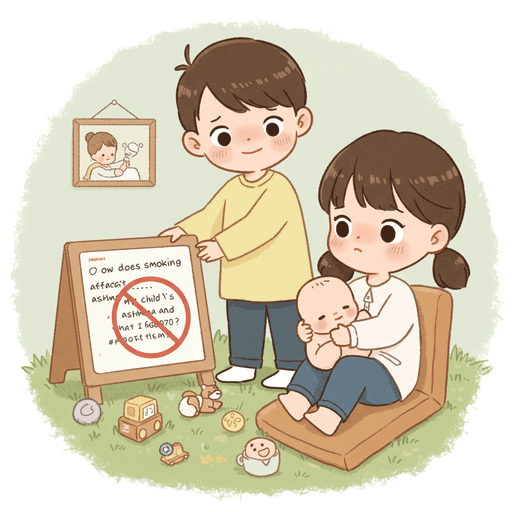
How does smoking affect my child's asthma, and what can I do to protect them?
Quick Answer

Smoking significantly worsens asthma in children, leading to more frequent flare-ups, increased medication needs, and more visits to the doctor.
Even secondhand smoke can trigger asthma symptoms.
Creating a smoke-free environment at home and advocating for smoke-free spaces are vital for protecting your child's health.
Recommended Practices

Create a Smoke-Free Home
Make your home a completely smoke-free zone.
This includes all rooms and vehicles.
Ask family members and visitors to smoke outside and away from windows and doors.
Consider using air purifiers to further reduce any lingering smoke particles.
Avoid Secondhand Smoke Exposure
Be mindful of places where your child might be exposed to secondhand smoke, such as restaurants, public spaces, and other people's homes.
Politely request that people not smoke around your child, explaining the impact on their asthma.
Choose smoke-free environments whenever possible.
Educate Your Child
As your child gets older, explain to them the dangers of smoking and secondhand smoke.
Teach them to recognize situations where they might be exposed and empower them to speak up or remove themselves from those situations.
This is especially important as they enter their teenage years.
Advocate for Smoke-Free Policies
Support policies that promote smoke-free environments in public places, schools, and workplaces.
This helps create a healthier environment for everyone, especially children with asthma.
You can write to your local representatives or join advocacy groups.
Regular Asthma Check-ups
Ensure your child has regular check-ups with their pediatrician or asthma specialist.
Discuss any changes in their symptoms or medication needs.
Regular monitoring helps manage their asthma effectively and prevent flare-ups.
Proper Use of Asthma Medications
Make sure you understand how to properly administer your child's asthma medications, including inhalers and nebulizers.
Work with your doctor or pharmacist to learn the correct techniques and dosages.
Keep medications readily available and check expiration dates regularly.
What to Avoid
Smoking Indoors
Never allow smoking inside your home or car.
Smoke particles can linger for hours, even with ventilation, and can trigger asthma symptoms in your child.
Remember, even 'just one cigarette' can be harmful.
Exposure to Thirdhand Smoke
Avoid furniture, clothing, or other items that have been exposed to smoke.
Thirdhand smoke is the residue left behind on surfaces after smoking, and it can still pose a risk to your child's health.
Clean surfaces regularly to minimize exposure.
Using Air Fresheners to Mask Smoke
Don't rely on air fresheners or other products to mask the smell of smoke.
These products can actually irritate your child's airways and worsen their asthma symptoms.
Focus on eliminating the source of the smoke instead.
Ignoring Early Asthma Symptoms
Don't ignore early signs of an asthma flare-up, such as coughing, wheezing, or shortness of breath.
Prompt treatment can prevent the flare-up from becoming more severe.
Follow your doctor's instructions for managing asthma symptoms.
Delaying Medical Attention
Don't delay seeking medical attention if your child's asthma symptoms worsen or don't improve with medication.
Severe asthma flare-ups can be life-threatening and require immediate medical care.
Trust your instincts and seek help when needed.
Believing 'Light' Cigarettes are Safer
Don't be misled by the idea that 'light' or 'low-tar' cigarettes are safer.
They still contain harmful chemicals and can trigger asthma symptoms.
There is no safe level of smoking exposure for a child with asthma.
Common Scenarios and Solutions


Your child's grandparent smokes in their home, and you visit frequently.
Have an open and honest conversation with your child's grandparent about the impact of smoking on your child's asthma.
Explain that even secondhand smoke can trigger flare-ups.
Ask if they would be willing to smoke outside or in a separate room when you visit.
Offer to provide resources about quitting smoking.
Your child's school bus driver smokes while driving.
Contact the school administration and express your concerns about the bus driver smoking.
Explain that it's a health hazard for children with asthma.
Request that the school enforce a no-smoking policy on school buses.
Your neighbor smokes on their balcony, and the smoke drifts into your home.
Talk to your neighbor politely and explain that the smoke is affecting your child's asthma.
Ask if they would be willing to smoke further away from your home or consider using a different type of smoking device that produces less smoke.
If the problem persists, you may need to contact your local housing authority.
Your teenager's friends smoke, and you're worried about peer pressure.
Have an open and honest conversation with your teenager about the dangers of smoking and vaping.
Explain the impact on their asthma and overall health.
Help them develop strategies for resisting peer pressure, such as practicing saying 'no' or finding smoke-free activities to do with their friends.
Similar Questions Parents Ask


Is vaping or e-cigarettes safer than smoking for my child with asthma?
No, vaping and e-cigarettes are not safer than smoking. They still contain harmful chemicals that can irritate the airways and trigger asthma symptoms.
Can air purifiers help reduce the risk of asthma flare-ups from smoke?
Yes, air purifiers with HEPA filters can help remove smoke particles from the air and reduce the risk of asthma flare-ups. Make sure to choose an air purifier that is appropriately sized for the room.
What are the long-term effects of secondhand smoke exposure on children with asthma?
Long-term exposure to secondhand smoke can lead to more frequent and severe asthma flare-ups, reduced lung function, and an increased risk of respiratory infections.
How can I help my child quit smoking if they have started?
Talk to your child's doctor about resources and support for quitting smoking, such as counseling, nicotine replacement therapy, and support groups. Be supportive and encouraging throughout the process.
Signs to Consult Immediately


Severe shortness of breath that doesn't improve with medication
Blue lips or fingernails
Difficulty speaking or eating
Chest pain or tightness
Rapid breathing or wheezing
Loss of consciousness
Detailed Explanation


Asthma is a chronic respiratory disease that causes inflammation and narrowing of the airways, making it difficult to breathe.
Children with asthma have sensitive airways that can be easily triggered by irritants such as smoke, dust, pollen, and pet dander.
When exposed to these triggers, the airways become inflamed, leading to coughing, wheezing, chest tightness, and shortness of breath.
Smoking and secondhand smoke are major triggers for asthma flare-ups in children.
The chemicals in cigarette smoke irritate the airways, causing them to swell and produce excess mucus.
This makes it even harder for children with asthma to breathe.
Secondhand smoke is especially harmful because children inhale it directly, and their lungs are still developing.
Normal developmental expectations for children with asthma vary depending on the severity of their condition.
Some children may experience mild symptoms that are easily controlled with medication, while others may have more severe symptoms that require frequent medical attention.
It's important to work with your doctor to develop an individualized asthma management plan for your child.
Warning signs that require medical attention include persistent coughing, wheezing, shortness of breath, chest tightness, difficulty speaking or eating, and blue lips or fingernails.
If your child experiences any of these symptoms, seek medical care immediately.
It's also important to monitor your child's peak flow readings (if prescribed) and seek medical attention if they drop below their personal best.
The guidance for managing asthma and avoiding smoke exposure may change as your child grows.
Infants and young children are particularly vulnerable to the effects of secondhand smoke, so it's important to create a smoke-free environment from the start.
As children get older, they can learn to recognize and avoid situations where they might be exposed to smoke.
Teenagers need to be educated about the dangers of smoking and vaping, as well as the importance of protecting their own health.
Premature babies and children with other health conditions, such as heart disease or lung disease, are at even greater risk from smoke exposure.
These children may have weaker immune systems and more sensitive airways, making them more susceptible to asthma flare-ups and other respiratory problems.
It's crucial to take extra precautions to protect these children from smoke exposure.
In India, seasonal changes can also affect asthma symptoms.
During the winter months, air pollution levels tend to be higher, which can worsen asthma.
In the monsoon season, humidity and mold growth can also trigger asthma flare-ups.
During the summer, dust and pollen levels may be high.
Be sure to adjust your child's asthma management plan as needed to account for these seasonal variations.
Sources
Indian Sources
Refer to the latest IAP guidelines for comprehensive information on asthma diagnosis and management in children. (Check for most recent publication year)
Search for articles on asthma and respiratory health in Indian children. (Check for relevant articles and publication years)
International Sources
WHO's fact sheet on tobacco highlights the dangers of smoking and secondhand smoke. "Second-hand smoke is the smoke that fills restaurants, offices or other enclosed spaces when people burn tobacco products, such as cigarettes, bidis and water-pipes. There is no safe level of second-hand smoke exposure."
UNICEF works to improve child health globally, including addressing respiratory illnesses like asthma.
Recommended Reading for Parents
AAFA provides comprehensive information on asthma and allergies, including resources for parents and children.
GINA provides evidence-based guidelines for asthma management and prevention.