
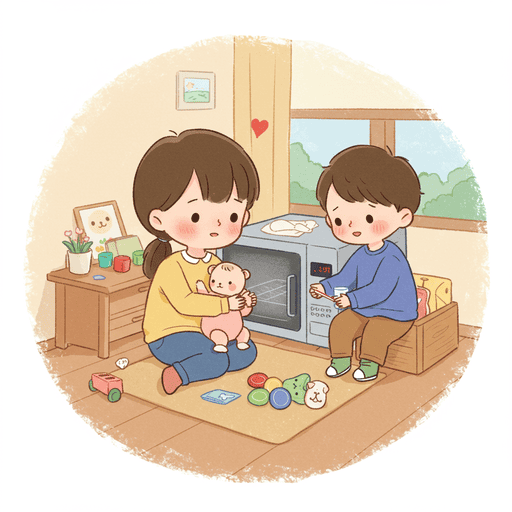
How can I keep my child safe around a microwave oven to prevent burns?
Quick Answer

Microwaves can be dangerous for young children due to the risk of burns from hot food and liquids.
Toddlers can operate microwaves, so keep them out of reach and never leave a child unattended while cooking.
Always supervise children around microwaves and teach them about the dangers of hot food.
Recommended Practices

Read the Manual
Always follow the manufacturer's instructions for operating the microwave. This includes recommended cooking times and safety precautions. Keep the manual handy for quick reference.
Stir and Wait
After microwaving food, stir it well to distribute heat evenly. Let it stand for two minutes before serving to prevent burns from hot spots. This is especially important for baby food and liquids.
Keep Out of Reach
Ensure young children cannot reach the microwave. If possible, install it above counter height. If it's on the counter, keep it pushed back and away from the edge.
Supervise Always
Never leave a young child alone while food is cooking in the microwave. Even a few seconds can be enough time for an accident to happen. Constant supervision is key.
Teach Older Children
If children are old enough to follow simple directions (usually 5+ years), teach them about microwave safety.
Explain the dangers of hot food and the importance of using oven mitts.
But even then, supervise them.
Use Safe Containers
Only use microwave-safe containers. Avoid metal containers, foil, or certain plastics that can melt or cause sparks. Glass or microwave-safe plastic containers are best.
What to Avoid
Don't Assume It's Safe
Microwaves are often overlooked as a potential hazard. Don't underestimate the risk of burns, especially for young children. Vigilance is crucial.
Avoid Overheating Liquids
Liquids can become superheated in a microwave and erupt when disturbed. Be extra cautious when heating water, milk, or soup. Use shorter intervals and stir frequently.
No Metal
Never put metal objects in the microwave. This includes foil, utensils, and containers with metal trim. Metal can cause sparks and fires.
Don't Block the Vent
Ensure the microwave's ventilation openings are not blocked. This can cause the microwave to overheat and malfunction.
Avoid Damaged Microwaves
Do not use a microwave with a damaged door, seal, or other parts. A damaged microwave can leak radiation and pose a safety risk. Get it repaired or replaced.
Don't Let Kids Operate Alone
Even if a child knows how to use the microwave, don't let them operate it unsupervised until they are much older (teen years) and fully understand the risks.
Common Scenarios and Solutions


Your toddler tries to open the microwave while it's running.
Immediately stop the microwave. Gently but firmly remove the child from the area. Explain that the microwave is hot and can cause burns. Consider installing a childproof lock on the microwave door.
Your child spills hot soup from the microwave.
Immediately cool the burn with cool (not cold) running water for 10-20 minutes.
Remove any clothing near the burn.
Apply a clean, dry bandage.
Seek medical attention if the burn is large, deep, or on the face, hands, or genitals.
You need to heat breast milk in the microwave.
Heat breast milk in short intervals (15-20 seconds) and stir well.
Always test the temperature on your wrist before feeding.
Microwaving breast milk can destroy some nutrients, so consider warming it in a bottle warmer or bowl of warm water instead.
Your older child wants to make popcorn in the microwave.
Supervise them closely. Teach them how to open the bag carefully to avoid steam burns. Remind them to use oven mitts to remove the hot bag from the microwave.
Similar Questions Parents Ask


Is it safe to microwave baby food?
Yes, but heat it in short intervals, stir well, and always test the temperature before feeding your baby to avoid burns.
Can I microwave formula?
It's generally not recommended, as it can create hot spots. If you must, heat it in short intervals and shake well to distribute the heat evenly.
What should I do if my child gets a microwave burn?
Cool the burn with cool running water for 10-20 minutes and seek medical attention if it's severe.
How can I childproof my kitchen?
Install safety latches on cabinets and drawers, keep sharp objects out of reach, and supervise children closely while in the kitchen.
Signs to Consult Immediately


Large or deep burns
Burns on the face, hands, feet, or genitals
Signs of infection (redness, swelling, pus)
Difficulty breathing
If the child is in significant pain
Detailed Explanation


Microwave ovens heat food by using electromagnetic radiation, which causes water molecules in the food to vibrate and generate heat.
This process can create uneven heating, leading to hot spots that can cause burns.
Children's skin is thinner and more sensitive than adults, making them more susceptible to burns from even slightly hot food or liquids.
Toddlers are naturally curious and like to mimic adults.
They may see you using the microwave and try to do it themselves.
Even if the microwave is placed up high, a child may climb on furniture or other objects to reach it.
This puts them at risk of burns from spills or explosions.
Microwave-related injuries in children often involve burns from spilled hot water or food, splashes, or contact with a hot item.
Children can also be burned when opening microwave popcorn bags or eating food that is cooked unevenly.
It's important to be aware of these risks and take steps to prevent them.
For babies (0-3 months), microwave safety is about ensuring that any breast milk or formula you heat is not too hot.
Always test the temperature before feeding.
For older babies (3-6 months) and infants starting solids (6-12 months), be extra careful with microwaved purees.
Stir well and let cool completely.
Premature babies and those with health conditions may have even more sensitive skin.
Take extra precautions to prevent burns.
If your baby has any special needs, consult with your pediatrician for specific advice.
In the summer, be mindful that even room-temperature liquids can heat up quickly in the microwave.
In the winter, people tend to heat things for longer, increasing the risk of burns.
During the monsoon, humidity can affect cooking times, so adjust accordingly.
Sources
Indian Sources
Refer to the IAP's guidelines for comprehensive information on burn prevention and management in children. While a direct link to burn guidelines isn't available, searching the IAP website will provide relevant resources.
Search the journal archives for articles related to pediatric burn injuries and prevention strategies in the Indian context.
International Sources
WHO provides global data and strategies for burn prevention. "Many burns are preventable. Countries need to implement and enforce effective burn prevention strategies."
UNICEF promotes child safety and well-being globally. Search their website for resources on injury prevention.
Recommended Reading for Parents
A comprehensive website with articles and resources on child health and safety, including burn prevention.