
What developmental milestones should my child reach by twelve months of age?
Developmental Milestones at 12 Months: A Quick Guide
| Category | Milestone | Typical Age Range |
|---|---|---|
| Movement | Walks holding onto furniture | 9-12 months |
| Movement | May take a few steps independently | 12 months |
| Hand & Finger Skills | Uses pincer grasp (thumb and forefinger) | 9-12 months |
| Language | Says 'mama' and 'dada' (specifically) | 9-12 months |
| Cognitive | Finds hidden objects easily | 9-12 months |
| Social/Emotional | Shy or anxious with strangers | 9-12 months |
Quick Answer

By 12 months, your baby is likely becoming more mobile, using their hands with greater skill, and starting to communicate with simple words and gestures.
They'll also be exploring objects in new ways and showing more social and emotional awareness.
Remember that every baby develops at their own pace, so there's a range of what's considered normal.
Recommended Practices

Encourage Movement and Exploration
Provide a safe space for your baby to crawl, creep, and explore.
Encourage them to pull themselves up to stand by providing stable furniture to hold onto.
Offer gentle support as they try to take their first steps, but don't force them.
Let them explore at their own pace.
Support Fine Motor Skills
Offer toys that encourage the use of the pincer grasp (picking up small objects with thumb and forefinger), such as small blocks or soft food pieces.
Provide containers and objects for them to put in and take out.
Encourage scribbling with crayons or large markers on paper.
Foster Language Development
Talk to your baby frequently, using simple words and phrases.
Respond to their babbles and gestures, and encourage them to imitate sounds and words.
Read books together, pointing to pictures and naming objects.
Play simple games like 'peek-a-boo' and 'pat-a-cake'.
Promote Cognitive Skills
Provide opportunities for your baby to explore objects in different ways, such as shaking, banging, throwing, and dropping.
Play games that involve hiding objects and finding them.
Encourage them to imitate gestures and actions, such as drinking from a cup or brushing their hair.
Nurture Social-Emotional Growth
Respond to your baby's cues and needs with warmth and affection.
Encourage interaction with other people, but respect their shyness or anxiety with strangers.
Play games that involve imitation and social interaction, such as clapping hands or waving goodbye.
Acknowledge and validate their feelings, even if you don't understand them.
Provide a Nutritious Diet
Continue to offer a variety of healthy foods, including fruits, vegetables, grains, and protein sources.
Encourage self-feeding with finger foods.
Be patient and understanding if they refuse certain foods, and continue to offer them at different times.
Avoid giving them sugary drinks or processed foods.
What to Avoid
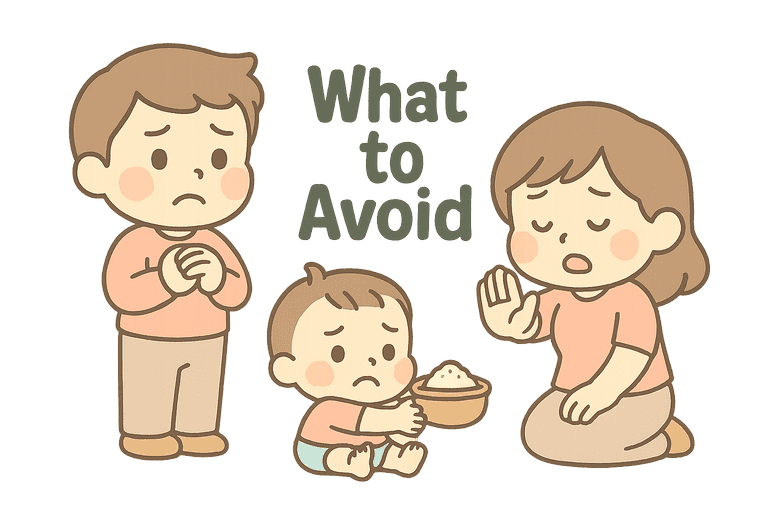
Discouraging Exploration
Avoid restricting your baby's movement and exploration too much.
While safety is important, allow them to explore their environment as much as possible.
Over-restriction can hinder their development and limit their learning opportunities.
Forcing Milestones
Don't try to force your baby to reach milestones before they are ready.
Every baby develops at their own pace, and pushing them too hard can be stressful and counterproductive.
Instead, focus on providing a supportive and stimulating environment.
Constant Use of Gadgets
Limit screen time (TV, tablets, phones) as it can interfere with cognitive and social development.
Babies learn best through real-world interactions and experiences.
Too much screen time can also lead to sleep problems and attention difficulties.
Comparing Your Baby to Others
Avoid comparing your baby's development to that of other babies. Every child is unique, and there is a wide range of what's considered normal. Comparing can lead to unnecessary anxiety and pressure.
Ignoring Their Cues
Pay attention to your baby's cues and needs. If they are tired, hungry, or uncomfortable, respond promptly and sensitively. Ignoring their cues can lead to frustration and distress.
Unsafe Baby Walkers
Avoid using baby walkers. They don't actually help babies learn to walk and can be dangerous. They can lead to falls and injuries, and they can also delay the development of proper walking skills.
Common Scenarios and Solutions


My baby isn't walking yet at 12 months. Should I be worried?
Not necessarily. Many babies don't start walking until 13-15 months. Encourage them to crawl and pull up to stand, and provide a safe environment for them to practice walking when they're ready.
My baby cries when I leave the room. What should I do?
This is a normal sign of separation anxiety. Try to make departures brief and predictable. Offer reassurance and comfort, and let them know you'll be back.
My baby refuses to eat certain foods. How can I encourage them to eat a balanced diet?
Offer a variety of healthy foods and don't force them to eat anything they don't like. Try offering the refused food again at a later time. Make mealtimes enjoyable and stress-free.
My baby is shy around strangers. How can I help them feel more comfortable?
Don't force them to interact with strangers. Allow them to warm up at their own pace. Hold them close and offer reassurance. Gradually expose them to new people and situations.
Similar Questions Parents Ask


When should my baby start crawling?
Most babies start crawling between 7 and 10 months, but some may skip crawling altogether and go straight to walking.
How many words should my baby be saying at 12 months?
At 12 months, babies typically say 1-3 words, such as 'mama,' 'dada,' and 'bye-bye,' but understanding many more.
Is it normal for my baby to still be waking up at night at 12 months?
Yes, it's common for babies to still wake up at night at 12 months. Try to establish a consistent bedtime routine and create a calming sleep environment.
How much should my baby be eating at 12 months?
At 12 months, babies typically eat three meals a day plus snacks. Offer a variety of healthy foods and let them eat until they're full.
Signs to Consult Immediately


Not crawling
Dragging one side of body while crawling (for over one month)
Cannot stand when supported
Does not search for objects that are hidden while he watches
Says no single words (mama or dada)
Does not learn to use gestures, such as waving or shaking head
Does not point to objects or pictures
Detailed Explanation


At 12 months, babies are typically highly mobile, often crawling, creeping, or even taking their first steps.
They're also developing fine motor skills, such as using the pincer grasp to pick up small objects.
Language development is also progressing, with babies often saying 'mama' and 'dada' and imitating other sounds and words.
Cognitively, they're exploring objects in new ways and understanding object permanence (knowing that an object still exists even when it's hidden).
Socially and emotionally, they're becoming more aware of their surroundings and showing preferences for certain people and toys.
Normal development at this age includes a wide range of variations.
Some babies may be walking independently by 12 months, while others may not take their first steps until 14 or 15 months.
Similarly, some babies may be saying several words, while others may only be babbling.
As long as your baby is making progress and developing new skills, there's usually no cause for concern.
Warning signs that require medical attention include not crawling, dragging one side of the body while crawling, not standing when supported, not searching for hidden objects, not saying single words, not using gestures, and not pointing to objects or pictures.
If you notice any of these signs, it's important to consult with your pediatrician.
From 0-3 months, focus on tummy time to strengthen neck and shoulder muscles.
3-6 months, babies start reaching for objects and rolling over.
6-12 months, they're sitting, crawling, and pulling up to stand.
Continue to provide opportunities for them to practice these skills as they grow.
Premature babies may reach milestones later than full-term babies.
It's important to adjust their age based on their due date when assessing their development.
Babies with health conditions may also develop at a different pace.
Work closely with your pediatrician to monitor their progress and address any concerns.
In the summer, ensure your baby stays hydrated and cool.
Dress them in light, breathable clothing and avoid exposing them to direct sunlight.
During the monsoon season, protect them from mosquitoes and other insects.
In the winter, keep them warm and dry.
Dress them in layers and avoid exposing them to extreme cold.
Sources
Indian Sources
Reference growth charts for Indian children, useful for monitoring physical development.
A peer-reviewed journal publishing research on child health and development in the Indian context.
International Sources
Information on child development, including milestones and factors that influence development.
Provides information on developmental milestones for babies and children.
Resources and information on early childhood development, including the importance of nurturing care.
Recommended Reading for Parents
A comprehensive guide to baby and child care, covering developmental milestones, health, and safety.
A popular book that provides month-by-month guidance on baby development and care.